

Your first morning
Everything you need to know before eight o'clock on day one, on one page. There is no fee, no deposit and nothing to buy.
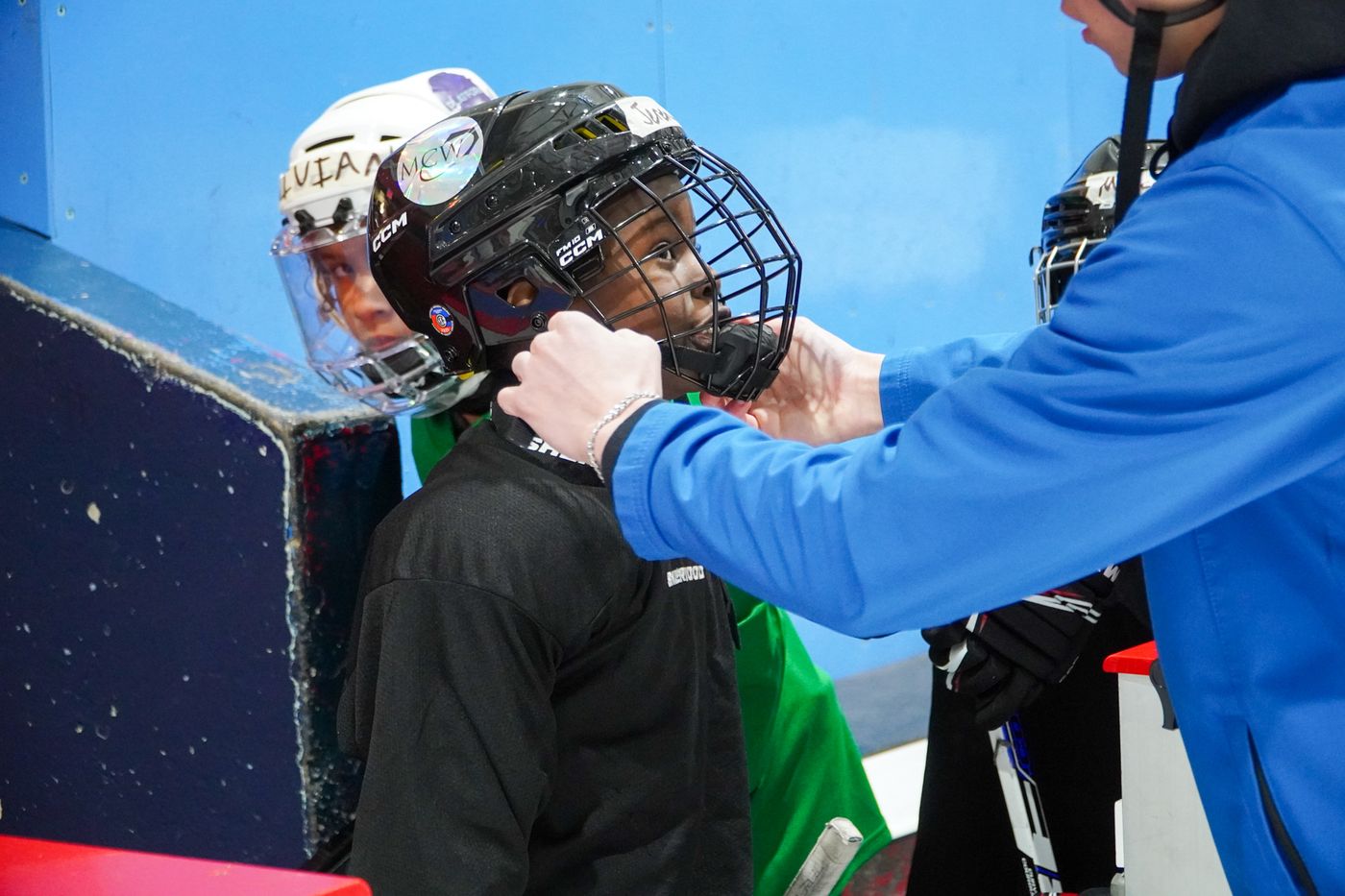
skate

- Skates first. They take the longest and everything else is quick.
- Tight over the foot, easier at the ankle. A child who cannot bend cannot skate.
- Two fingers at the top. If you can get three in, it is too loose.
- Tuck the ends. Not wrapped round the ankle, and never round the blade.
A volunteer does this with you on the first morning. Nobody expects you to know it, and nobody will let your child onto the ice in skates that are not done up properly.

bring
- A water bottleWith their name on it. The arena is dry and four days is a long time.Bring it
- LayersA long sleeve top under the gear and a warm jacket for the bench. Arenas sit at about five degrees.Bring it
- Thin socksNot thick sports socks. Skates fit better over thin ones and blisters start with bunched fabric.Bring it
- A snackLunch is provided every day and so is water. A snack for the drive home is a good idea because they will be hungrier than you expect.Optional
- The waiverSigned, once, on the first morning if you have not sent it ahead. It takes two minutes at the desk.Bring it
- Any equipment you already ownIf your child has skates that fit, bring them. If not, that is completely fine and expected. We fit everybody on day one.Optional
- Nothing elseNo fee, no deposit, no forms to buy, no uniform. If anybody tells you otherwise, it is not us.Optional
Screenshot this. It is the whole list.
What actually happens between 8:00 and 8:30
Nobody is thrown onto the ice cold. The first half hour is entirely about getting your child comfortable and fitted.
- 8:00, the desk. Give us your child's name. We tick them off, take the waiver if you have not sent it, and hand you a name tag.
- 8:05, sizing. A volunteer measures your child and fits skates first, because skates take the longest and everything else is quick.
- 8:15, the rest of the gear. Shin pads, pants, shoulder pads, elbow pads, gloves, helmet. We do it in that order because it is the order it goes on.
- 8:25, the stick. Cut to your child, not to a shelf size. They keep it.
- 8:30, on the ice. That is it. You are welcome to stay and watch from the stands or come back at three.
A rough idea before you arrive
Everybody is measured and fitted in person on the first morning. This is only so you know roughly what to expect.
Type a height and the row below will highlight.
| Height | Skates | Pads | Stick | Flex |
|---|---|---|---|---|
| 105 to 115 cm | Youth 10 to 11 | XS | 38 inch | Junior |
| 115 to 125 cm | Youth 12 to 13 | S | 40 inch | Junior |
| 125 to 135 cm | Youth 1 to 2 | S | 42 inch | Junior |
| 135 to 145 cm | Junior 3 to 4 | M | 46 inch | Junior |
| 145 to 155 cm | Junior 5 to 6 | M | 50 inch | Intermediate |
| 155 to + cm | Senior 7 and up | L | 54 inch | Intermediate |
This is a starting point, not a decision. Every camper is measured and fitted in person on the first morning, and nobody leaves in gear that does not fit.
If you have never watched a hockey practice
Nine terms you will hear on day one, in plain English. Nobody will mind you asking.
- Crossover
- Stepping one skate over the other to turn while still moving. It is the first thing that makes a child look like a hockey player rather than someone standing on ice.
- Edges
- The two sharp sides of a skate blade. Almost everything in skating is about which edge you are on and how hard you lean into it.
- Dryland
- Training off the ice. Running, footwork, stickhandling on the floor. We use it between the two ice sessions each day so the morning is not wasted waiting.
- House league
- Recreational minor hockey. No tryouts, everybody plays, teams are balanced. This is where almost every child starts and where most of them stay.
- Rep
- Competitive minor hockey with tryouts and travel. Costs several times what house league costs. Not where we are pointing anybody, and not the measure of whether hockey worked for a child.
- Learn to Play
- Introductory programmes for children who have never skated. Our First Stride group is our version of this.
- Shinny
- Informal pick-up hockey with no coaches and no score that matters.
- Full gear
- Helmet with a cage, shoulder pads, elbow pads, gloves, pants, shin guards, skates and a stick. All of it. About five hundred and fifty dollars new, and every camper here keeps a set.
- Ice time
- An hour on an arena surface, bought from the city or the arena operator. Between three hundred and four hundred and fifty dollars, depending on the rink and the time of day. We buy three hours of it a day.
- Registration fee
- What an association charges a family per season. The single most common reason a child who wants to play does not.
Ask us anything at all
Write in whatever language is easiest for you and we will work it out. There is no such thing as a question we mind.